
Key Takeaways
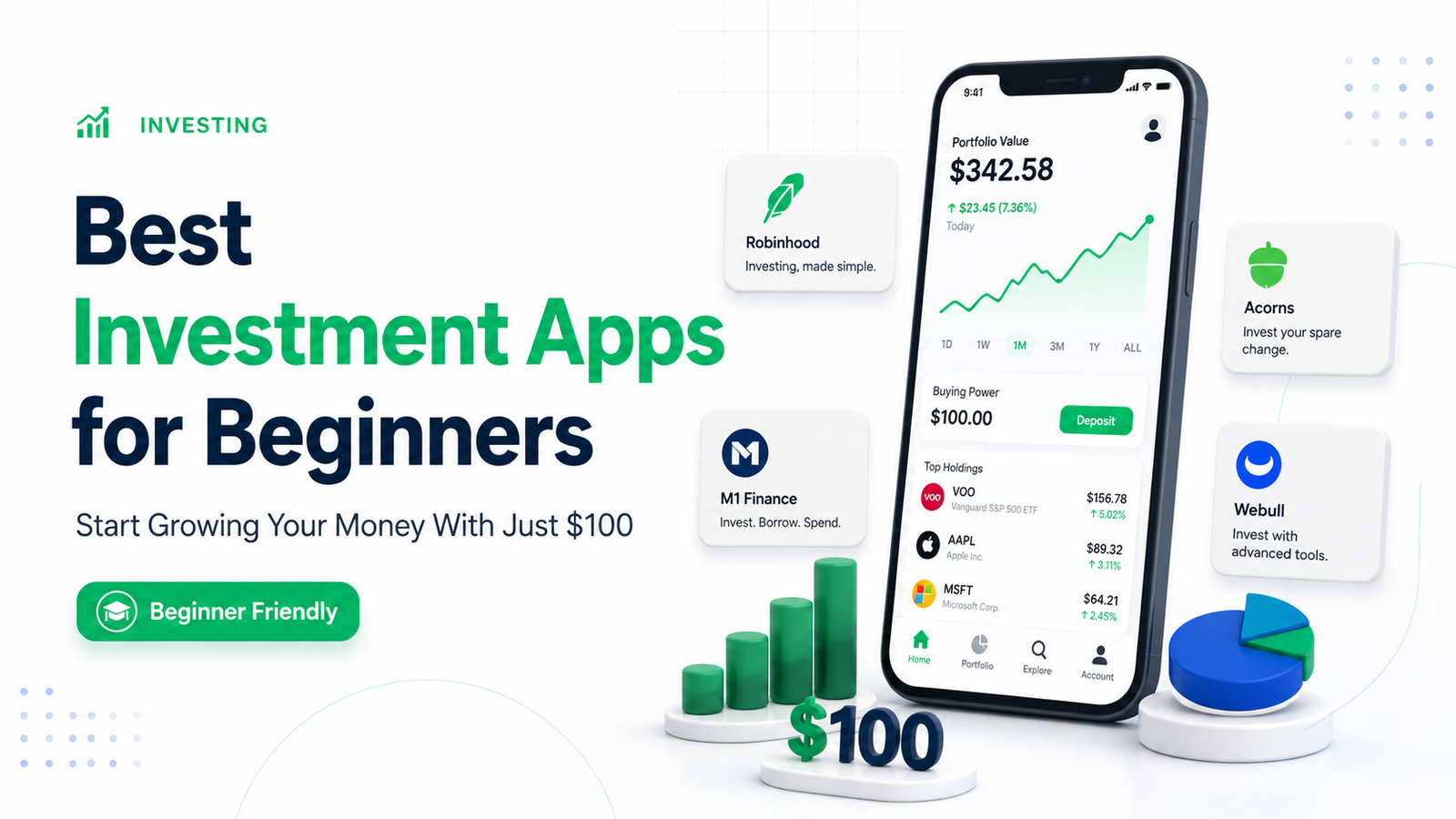
- You can start investing with as little as $100 using the right app
- The best beginner app is the one you will actually use consistently
- Low or zero fees matter more at the start — costs eat returns fast
- Index fund investing beats stock picking for most beginners
- Automation is the most powerful feature to look for in any investment app
You do not need thousands of dollars to start investing. You need $100 and the right app.
The problem is that there are dozens of investment apps out there — and most beginners have no idea which one to trust, which fees to watch out for, or what to actually buy once they sign up.
This guide cuts through the noise. We compare the best investment apps for beginners, explain exactly what each one is good for, and help you pick the right one for your situation — even if you have never invested a single dollar before.
Table of Contents
Step 1 — What to Look for in a Beginner Investment App
Before comparing specific apps, you need to know what actually matters. Most beginners focus on the wrong things — like which app looks the coolest or which one their friend uses.
Here is what actually matters when choosing an investment app as a beginner:
- Zero or low fees. Even a 1% annual fee can cost you tens of thousands of dollars over 30 years. Look for apps with no account fees and no trading commissions.
- Fractional shares. This lets you buy a piece of an expensive stock or ETF with as little as $1. Essential when starting with $100.
- Automatic investing. The ability to set up recurring investments on autopilot removes emotion from the equation.
- Simple interface. If the app is confusing, you will not use it. Simplicity wins at the beginning.
- Educational resources. Good beginner apps teach you as you invest.
- Regulated and trustworthy. Only use apps that are regulated by financial authorities in your country.
External resource: Best investment apps — Investopedia
Step 2 — Best Investment Apps for Beginners Compared
Here is a breakdown of the top investment apps for beginners based on fees, features, and ease of use.
1. Acorns — Best for Hands-Off Investing
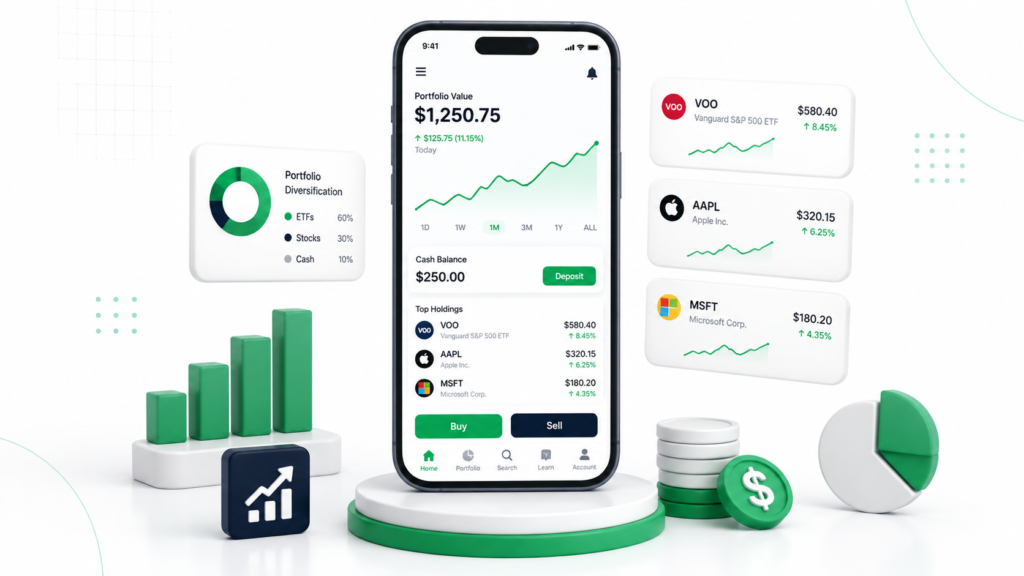
Acorns rounds up your everyday purchases and invests the spare change automatically. If you spend $3.60 on coffee, it rounds up to $4 and invests $0.40. It is the most passive way to start investing and requires almost zero effort.
- Minimum: $5
- Fee: $3/month (Lite), $5/month (Gold)
- Best for: People who struggle to save and invest consistently
- Invests in: Diversified ETF portfolios
2. Robinhood — Best for Commission-Free Stock Trading
Robinhood pioneered commission-free trading and remains one of the most popular apps for beginners. You can buy individual stocks, ETFs, and even cryptocurrency with no trading fees.
- Minimum: $1 (fractional shares)
- Fee: $0 commissions, optional Gold plan at $5/month
- Best for: Beginners who want to pick individual stocks
- Invests in: Stocks, ETFs, crypto, options
3. Fidelity — Best Overall for Long-Term Beginners
Fidelity is one of the most trusted investment platforms in the world. It has zero account fees, zero minimum to open, fractional shares, and some of the best zero-fee index funds available anywhere.
- Minimum: $0
- Fee: $0 commissions, zero-expense-ratio index funds
- Best for: Beginners serious about long-term wealth building
- Invests in: Stocks, ETFs, mutual funds, bonds, IRAs
4. Betterment — Best for Automated Portfolio Management
Betterment is a robo-advisor that builds and manages a diversified portfolio for you based on your goals and risk tolerance. You answer a few questions, deposit money, and Betterment does the rest.
- Minimum: $0 (Digital), $100,000 (Premium)
- Fee: 0.25% annual fee
- Best for: Beginners who want their portfolio managed automatically
- Invests in: Diversified ETF portfolios
5. Public — Best for Beginners Who Want to Learn
Public combines investing with a social community where you can see what other investors are buying and follow their reasoning. It is a great learning environment for beginners who want to understand the market while they invest.
- Minimum: $1
- Fee: $0 commissions
- Best for: Beginners who want to learn from other investors
- Invests in: Stocks, ETFs, crypto, bonds
| App | Minimum | Fee | Best For |
|---|---|---|---|
| Acorns | $5 | $3–$5/mo | Hands-off investing |
| Robinhood | $1 | $0 | Stock picking |
| Fidelity | $0 | $0 | Long-term building |
| Betterment | $0 | 0.25%/yr | Auto management |
| Public | $1 | $0 | Learning & community |
Step 3 — What to Actually Invest in as a Beginner
Picking the right app is only half the equation. You also need to know what to buy once you are inside the app.
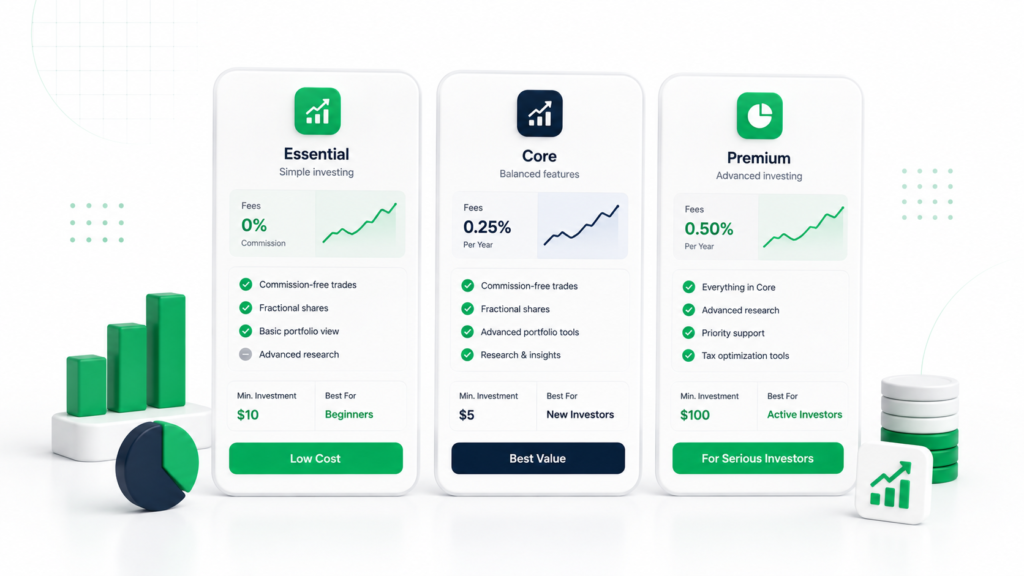
For most beginners, the answer is simple: index funds or ETFs.
An index fund is a collection of hundreds or thousands of stocks bundled together. Instead of betting on one company, you are betting on the entire market — which has historically grown at around 7 to 10% per year over the long term.
Three solid options for beginners:
- VTI — Vanguard Total Stock Market ETF. Covers the entire US stock market.
- VOO — Vanguard S&P 500 ETF. Tracks the 500 largest US companies.
- FZROX — Fidelity Zero Total Market Index Fund. Zero expense ratio.
External resource: How to invest in index funds — NerdWallet
Also read: How to Invest in Index Funds — Complete Beginner Guide
Step 4 — How to Start Investing with $100 Today
Here is the exact process to go from zero to invested in under 30 minutes:
- Pick one app from the list above based on your goal. If you want simple and automatic, choose Betterment or Acorns. If you want control, choose Fidelity or Robinhood.
- Create your account. You will need your email, ID, and bank account details.
- Deposit $100. Link your bank and transfer your starting amount.
- Choose your investment. For most beginners, select a total market index fund or ETF. If using a robo-advisor, it will choose for you.
- Set up automatic deposits. Even $20 or $50 per month on autopilot will compound significantly over time.
- Leave it alone. Do not check it every day. Investing is a long game.
Also read: What is Compound Interest? And Why It Makes You Rich
Step 5 — Common Mistakes Beginners Make
- Waiting for the perfect moment. There is no perfect moment. Time in the market beats timing the market every time.
- Checking the balance daily. Markets go up and down. Watching every move leads to panic selling.
- Picking individual stocks too early. Individual stocks are volatile. Start with diversified index funds.
- Ignoring fees. A 1% annual fee on a $100,000 portfolio costs you $1,000 per year — and far more in lost compounding.
- Stopping during a market dip. Market dips are actually buying opportunities for long-term investors.
External resource: Investing mistakes beginners make — The Balance
Frequently Asked Questions
Can I really start investing with just $100?
Yes. Most apps on this list allow you to start with $1 to $5. With $100 you can build a properly diversified portfolio using fractional shares or ETFs. The amount matters less than starting early and being consistent.
Which investment app is best for absolute beginners?
Betterment or Acorns are the easiest entry points because they make all the decisions for you. If you want more control and lower long-term fees, Fidelity is the best overall choice for beginners who plan to invest for years.
Is it safe to invest through an app?
Yes, as long as you use regulated platforms. All apps listed here are regulated and insured by SIPC (Securities Investor Protection Corporation) in the US, which protects your account up to $500,000 in case the brokerage fails. This does not protect against normal market losses.
Final Thoughts
The best investment app for beginners is the one you will actually open, fund, and stick with. Do not spend weeks comparing every feature — pick one from this list, deposit your $100, and start.
Time is the most powerful force in investing. Every month you wait is a month of compounding you will never get back.
Start small. Stay consistent. Let time do the heavy lifting.