
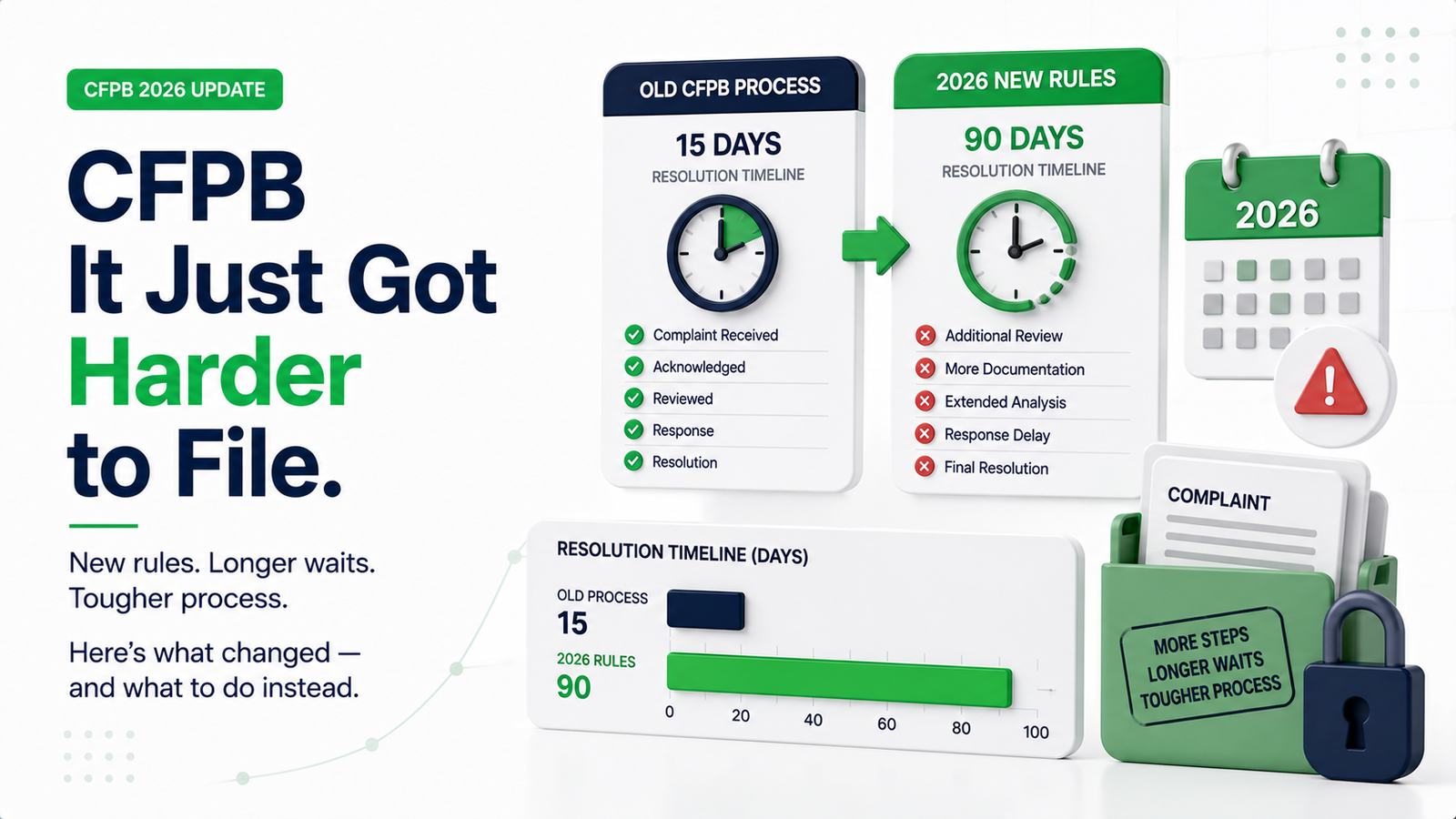
If you’ve ever had a dispute with a bank, a debt collector, or a financial service provider, you probably already know how frustrating the process can be. Now, in 2026, it’s gotten measurably harder. The Consumer Financial Protection Bureau (CFPB) — the federal agency created specifically to protect everyday Americans from unfair financial practices — has introduced new procedural hurdles that make it significantly more difficult to file a complaint and actually receive meaningful relief. Whether you’re dealing with a billing error on your account, unauthorized charges, or a financial company that simply won’t respond to your concerns, understanding your rights and knowing the most effective steps to take has never been more important.
Disclosure: This article contains affiliate links. We may earn a commission at no extra cost to you.
Key Takeaways
- The CFPB received over 1.3 million consumer complaints in 2024 alone — and new 2026 rule changes are making it harder for those complaints to result in action.
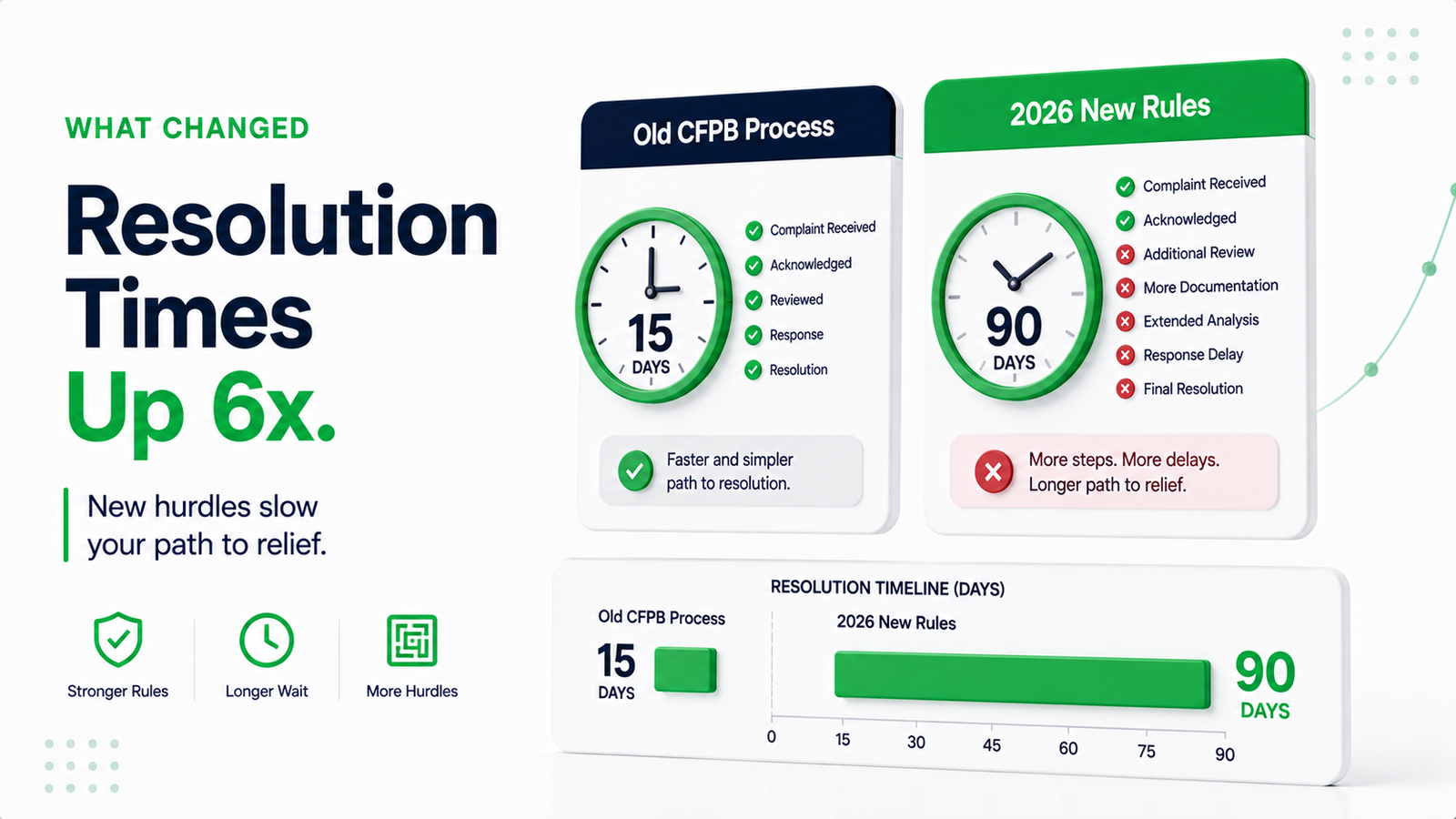
- New CFPB procedural changes include stricter documentation requirements and longer response timelines, with some cases now taking 90+ days to resolve.
- Consumers still have multiple alternative routes to escalate financial disputes, including state attorneys general, the FTC, and small claims court.
- Keeping meticulous financial records and choosing transparent, ethical financial platforms can dramatically reduce your risk of disputes in the first place.
- Switching to low-fee, transparent investment and money management tools like Betterment, Acorns, or Wise can reduce your exposure to the types of hidden charges that trigger complaints.
What Is the CFPB and Why Does It Matter?
The Consumer Financial Protection Bureau was established in 2011 under the Dodd-Frank Wall Street Reform and Consumer Protection Act. Its core mission is simple: to make sure financial companies treat consumers fairly and that Americans have access to transparent, honest financial products and services.
Over its relatively short lifespan, the CFPB has returned more than $17.5 billion in relief to over 200 million consumers. It has taken action against predatory debt collectors, deceptive mortgage servicers, and companies that charged hidden fees without consent. For millions of Americans who had nowhere else to turn, the CFPB’s complaint portal became the most powerful tool they had.
In a typical year, the CFPB handles more than a million consumer complaints. In 2024, that number reached approximately 1.3 million, with the most common categories being credit or consumer reporting issues (roughly 54% of all complaints), debt collection (around 12%), and problems related to checking or savings accounts (about 7%). These aren’t trivial issues — they represent real financial harm to real families.
So when changes are made to how that complaint system works, the stakes are enormous. And that’s exactly what’s happened heading into 2026.
What Changed in 2026 — The New Complaint Hurdles
The structural shifts at the CFPB that began in late 2025 have accelerated into 2026, creating a noticeably more difficult environment for everyday consumers seeking financial relief. Here’s a breakdown of the key changes:
1. Stricter Documentation Requirements
Where consumers previously only needed to provide a brief description of their complaint and some basic account details, the new process requires significantly more upfront documentation. This includes account statements, prior correspondence with the financial institution, and evidence that you’ve already attempted to resolve the issue directly with the company — often requiring proof of at least two separate contact attempts.
For many consumers, particularly older Americans or those without easy access to digital records, gathering this level of documentation is a real barrier. It is estimated that as many as 30% of potential complainants abandon the process at the documentation stage.
2. Longer Response Windows
Under previous CFPB rules, financial companies were required to respond to complaints within 15 calendar days, with a final response due within 60 days. The revised guidelines have extended the initial response window for certain categories of complaints, with some cases now taking 90 days or longer to reach resolution. For consumers dealing with frozen accounts, disputed charges, or withheld funds, a 90-day wait isn’t just inconvenient — it can be financially devastating.
3. Reduced Public Complaint Database Transparency
One of the CFPB’s most powerful tools was its public-facing Consumer Complaint Database, where anyone could see how many complaints had been filed against a specific company and what types of issues were most common. Changes to what data is published and how it is searchable have reduced the effectiveness of this resource, making it harder for consumers to make informed decisions based on a company’s complaint history.
4. Staffing and Enforcement Reductions
Budget and staffing cuts at the CFPB mean fewer investigators are available to pursue complaints that may warrant enforcement action. This increases the likelihood that your complaint, even if filed correctly, results in no direct action beyond a company response — which the company itself drafts.
How the CFPB Complaint Process Used to Work
To appreciate the significance of these changes, it helps to understand what the CFPB complaint process looked like at its most effective. Filing a complaint used to be straightforward:
- Visit consumerfinance.gov/complaint and describe your issue in plain language.
- The CFPB would forward your complaint to the company, which was required to respond within 15 days.
- The complaint would be logged in a publicly searchable database.
- If warranted, the CFPB could escalate the case into an investigation.
The beauty of the old system was its accessibility. You didn’t need a lawyer. You didn’t need to know financial regulations. You just needed to explain what happened to you. That accessibility was, in many ways, the entire point — and it’s what’s most at risk with the current changes.
What the New Rules Mean for You in Real Terms
Let’s put this in concrete terms. Imagine you’re a working parent who notices that a financial services company has been charging you an undisclosed monthly fee of $14.99 for eight months — that’s nearly $120 out of your pocket that you never agreed to. Under the old system, you could file a complaint quickly and expect a response within two weeks. Under the new system, you may need to gather months of bank statements, prove you’ve contacted the company twice, and then wait up to 90 days — all while hoping someone at a reduced-staff agency has the capacity to actually review your case.
For larger disputes — say, a $2,500 unauthorized transaction or a $400 overdraft fee you believe was applied incorrectly — the stakes are even higher. The new system disproportionately disadvantages consumers who can least afford to wait: those living paycheck to paycheck, those with limited digital literacy, and those without legal resources.
According to FTC Consumer Sentinel Network data, Americans lost more than $10 billion to financial fraud and disputes in 2023 — a figure that experts expect to rise further in 2026 as complaint resolution becomes less efficient.
Alternative Ways to File a Financial Complaint in 2026
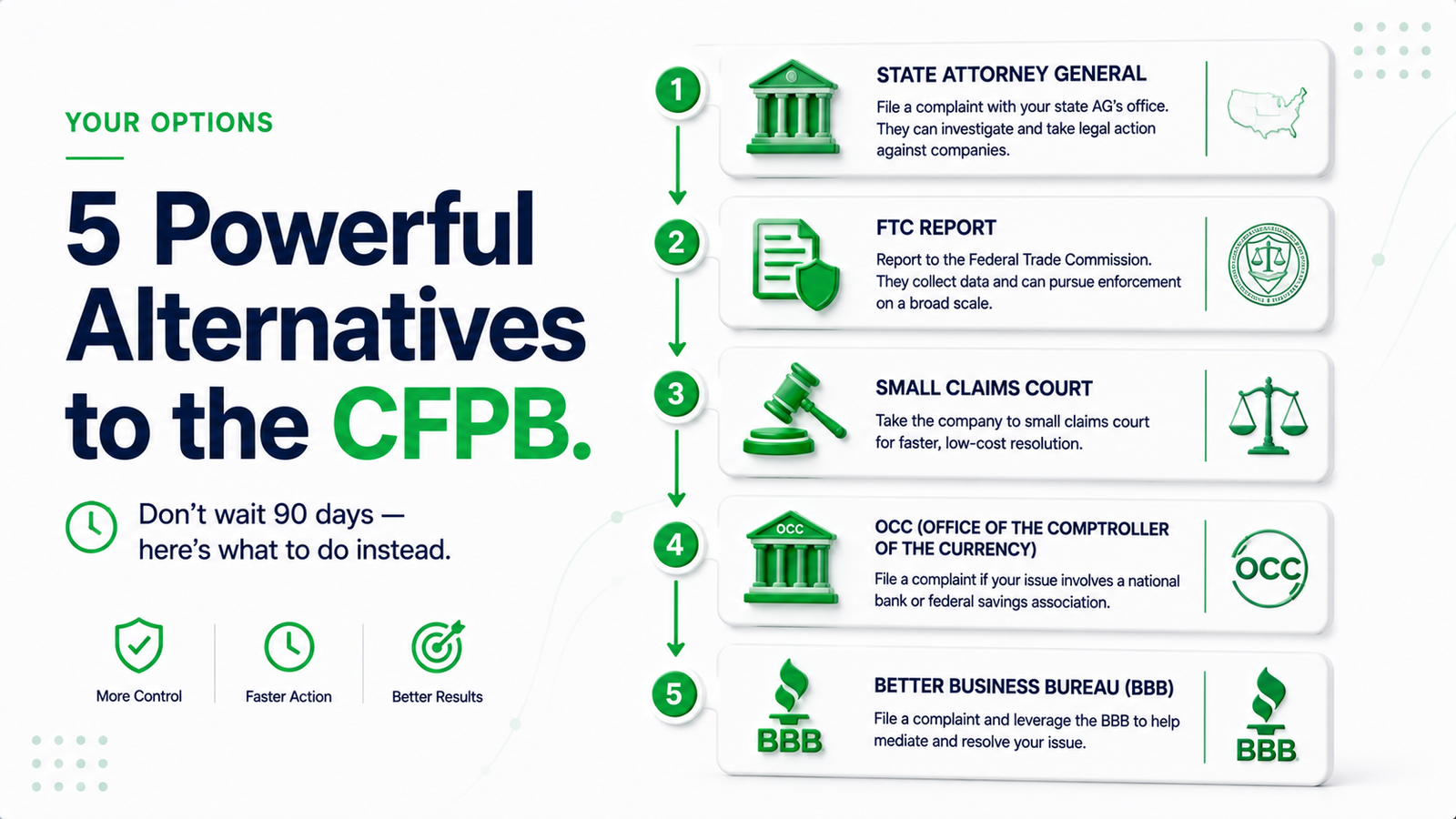
The good news is that the CFPB is not your only option. If you’re facing a financial dispute, here are the most effective alternative channels available to you right now:
Your State Attorney General
Every U.S. state has an Attorney General’s office with a consumer protection division. Many of these offices have become more active in 2026 precisely because of the gaps left by a reduced CFPB. Filing a complaint here can be just as effective — and sometimes faster — depending on your state. You can find your state AG’s contact information at naag.org.
The Federal Trade Commission (FTC)
The FTC handles complaints related to deceptive business practices, identity theft, and fraud. While the FTC doesn’t resolve individual complaints directly, your report feeds into databases that drive enforcement actions. Visit ReportFraud.ftc.gov to file.
Small Claims Court
For disputes involving amounts typically between $500 and $10,000 (limits vary by state), small claims court is a surprisingly accessible and often effective option. Filing fees are usually between $30 and $100, and you don’t need an attorney. Many consumers who go this route win simply because the financial company fails to show up or settle beforehand.
Your State Banking Regulator
If your complaint involves a bank specifically, your state’s banking regulator may have jurisdiction. National banks are regulated by the Office of the Comptroller of the Currency (OCC), which has its own complaint process at helpwithmybank.gov.
The Better Business Bureau (BBB)
While the BBB has no legal authority, a formal complaint on their platform creates a public record that companies often respond to quickly to protect their ratings — especially for amounts under $1,000.
How to Protect Yourself Before a Problem Even Starts
The most effective strategy is prevention. Choosing transparent, ethical, and well-regulated financial platforms significantly reduces the likelihood of ever needing to file a complaint in the first place. If you’re thinking about where to manage your savings, investments, or money transfers, consider platforms with strong track records for transparency and low fees:
- Wise — For international money transfers, Wise shows you the exact exchange rate and fee before you confirm any transaction. No hidden charges, no surprises. Ideal for anyone sending money abroad.
- Betterment — A robo-advisor platform with a clearly disclosed fee structure (0.25% annually for the digital plan). You always know exactly what you’re paying and why.
- Acorns — Rounds up your everyday purchases and invests the spare change into diversified portfolios. Plans start at $3/month, clearly stated upfront. Great for beginners who want a hands-off approach.
- Robinhood — Commission-free investing with clear, accessible disclosures. Well-regulated and straightforward for those wanting to manage their own portfolio.
- eToro — Offers transparent fee disclosures and a social trading environment. Good for those interested in passive index-style investing through CopyPortfolios.
If you’re building a stronger financial foundation, our guide on How to Make a Monthly Budget You Will Actually Stick To in 2026 is an excellent starting point for gaining clarity over your money — and knowing exactly where every dollar goes.
Comparison: Your Best Options for Resolving a Financial Dispute
| Option | Best For | Typical Resolution Time | Cost to You | Legally Binding? |
|---|---|---|---|---|
| CFPB Complaint (2026) | All financial disputes | 60–90+ days | Free | No (may trigger investigation) |
| State Attorney General | State-level consumer fraud | 30–60 days | Free | No (may trigger state action) |
| FTC Report | Fraud, identity theft | Ongoing / no individual resolution | Free | No |
| Small Claims Court | $500–$10,000 disputes | 4–12 weeks | $30–$100 filing fee | Yes |
| OCC (for national banks) | Bank-specific issues | 30–45 days | Free | No |
| BBB Complaint | Small disputes, reputational pressure | 2–4 weeks | Free | No |
| Private Mediation | Mid-to-large disputes | 1–3 months | $100–$500+ | Sometimes |
Smart Financial Habits That Reduce Your Complaint Risk
Beyond choosing the right platforms, developing strong financial habits is your best long-term defense. Here are practical steps you can take starting today:
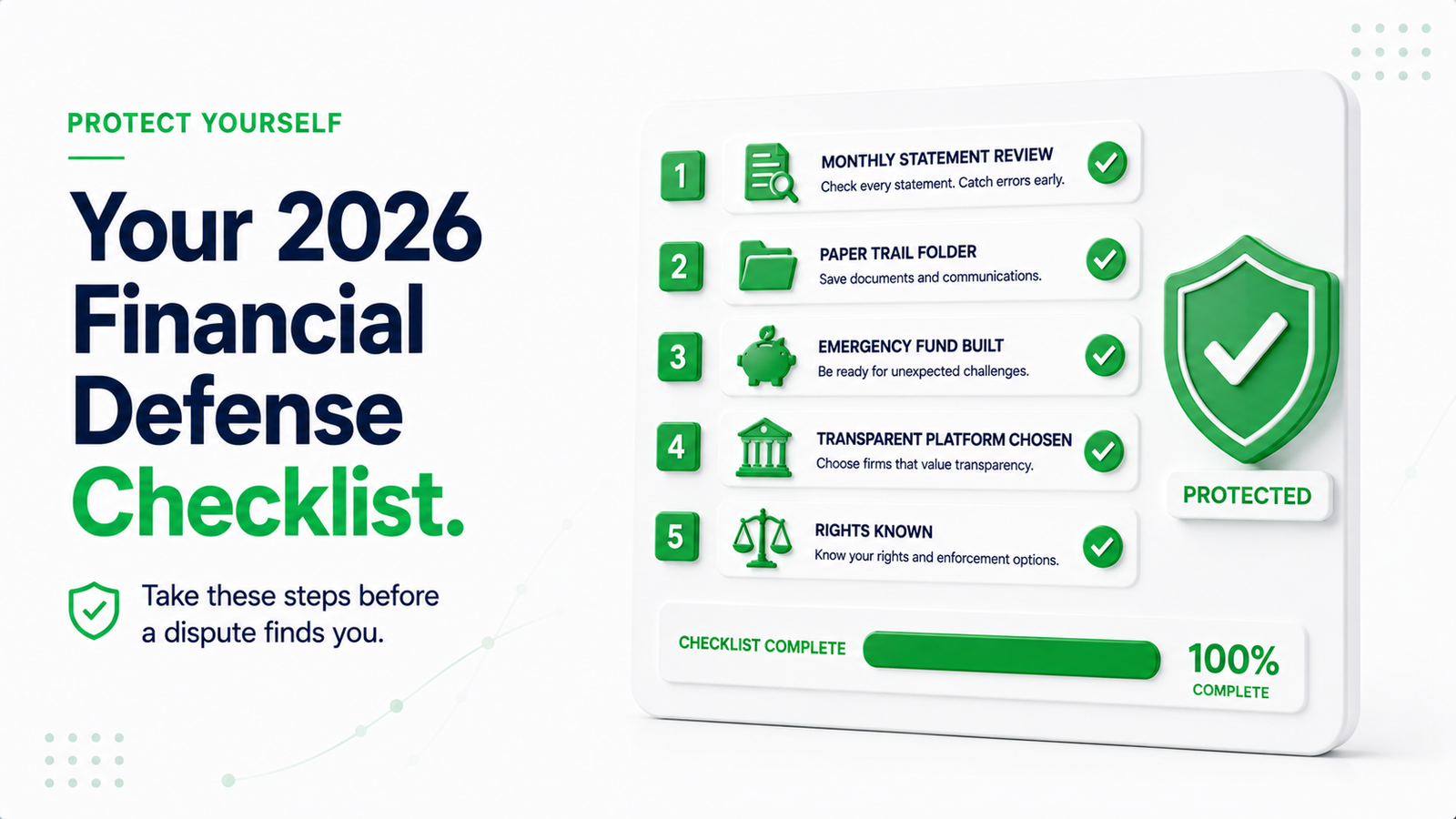
Review Your Statements Monthly — Every Single One
Set aside 20 minutes at the end of each month to go through every line of every financial statement. Unauthorized charges and billing errors are almost always caught this way. If you use multiple accounts, a budgeting tool can consolidate everything in one place. Our article on building a budget that actually works walks you through exactly how to structure this review.
Keep a Dispute-Ready Paper Trail
Store screenshots, emails, and chat transcripts every time you interact with a financial company about a problem. Given the new CFPB documentation requirements in 2026, having this evidence organized and ready to go can cut your complaint preparation time from hours to minutes.
Build an Emergency Fund First
One of the biggest reasons financial disputes become catastrophic is that people don’t have a cash buffer. If a company freezes your account or withholds funds for 90 days while a complaint is processed, having 3–6 months of living expenses saved means you can weather the storm without panic. Our guide on How to Build an Emergency Fund Fast gives you a clear, actionable roadmap.
Diversify Where You Keep Your Money
Don’t rely on a single financial platform for everything. Keep your emergency fund in a separate account from your day-to-day spending, and consider using different platforms for investing, saving, and transfers. Tools like Acorns for micro-investing, Wise for transfers, and Betterment for long-term wealth building each have specific strengths — and using them in combination reduces your single-point-of-failure risk.
Invest in Your Financial Education
Consumers who understand basic financial concepts are far better equipped to spot when something is wrong and to take action quickly. If you’re newer to investing, our Complete Beginner Guide to Index Fund Investing is a great place to start building that knowledge base.
Platforms like Interactive Brokers and Degiro are also worth exploring for their transparent fee disclosures and robust regulatory compliance — particularly for UK-based readers who want EU-regulated investment options with clear pricing structures.
Know Your Dispute Rights Before You Need Them
Under the Fair Credit Billing Act (FCBA), you have the right to dispute unauthorized credit charges, and the company must investigate. Under the Electronic Fund Transfer Act (EFTA), you have similar protections for debit and electronic transactions — but only if you act within specific timeframes (typically 60 days from when the error appears on your statement). Knowing these rights before a problem arises means you can act quickly and decisively.
Frequently Asked Questions
Can I still file a CFPB complaint in 2026?
Yes, the CFPB complaint portal remains active in 2026 and you can still submit complaints at consumerfinance.gov/complaint. However, new documentation requirements mean you’ll need to provide more upfront evidence than before, including proof that you’ve already tried to resolve the issue directly with the financial company. Despite the changes, filing a CFPB complaint is still worthwhile — especially for larger disputes — as it creates an official record and may still trigger a company response or investigation.
What if the CFPB doesn’t resolve my complaint? What are my options?
You have several strong alternatives. You can file with your state’s Attorney General office, report to the FTC at ReportFraud.ftc.gov, contact your state banking regulator, or take the matter to small claims court for disputes typically up to $10,000. For national bank issues specifically, the OCC’s Customer Assistance Group at helpwithmybank.gov is a direct alternative. Don’t assume the CFPB is your only path — in many cases, state-level agencies or small claims court can deliver faster, more tangible results.
How long does the CFPB complaint process take in 2026?
Under revised 2026 guidelines, companies now have extended timeframes to respond to certain types of complaints. While the CFPB still aims for companies to provide an initial response within 15 days, full resolution for more complex complaints can now take 90 days or longer. Simple complaints where the company responds quickly and the consumer accepts the response can still close in 3–4 weeks. If your dispute involves time-sensitive funds, you should pursue small claims court or a state regulator simultaneously rather than waiting solely on the CFPB process.
What documents do I need to file a financial complaint in 2026?
You’ll typically need: account statements showing the disputed charge or error, written records of your previous attempts to contact the financial company (emails, chat logs, or written notes of phone calls with dates and representative names), any contracts or terms of service that were allegedly violated, and a clear description of the specific dollar amount in dispute. The more organized and specific your documentation, the faster your complaint will move through the system. Start a dedicated folder — digital or physical — for all financial correspondence as soon as a problem arises.
Can choosing better financial apps really reduce my complaint risk?
Absolutely. Many financial complaints stem from hidden fees, unclear terms, and poor customer service — problems that transparent, well-regulated platforms are far less likely to create. Platforms like Betterment, Wise, and Acorns are built around fee transparency and regulatory compliance, which means you’re far less likely to encounter the kind of unexpected charges or service failures that lead to complaints in the first place. Choosing carefully upfront is always more effective than resolving disputes after the fact.
Ready to Take Control of Your Finances?
Don’t wait for a financial dispute to realize you need better systems in place. Start today: review your last three months of financial statements for any unexplained charges, set up a dedicated folder for financial records and correspondence, and explore transparent platforms like Wise for transfers, Acorns for micro-investing, or Betterment for long-term planning. Then build your financial safety net — check out our step-by-step guide on How to Build an Emergency Fund Fast to ensure you always have a buffer if things go wrong. Your future self will thank you.