
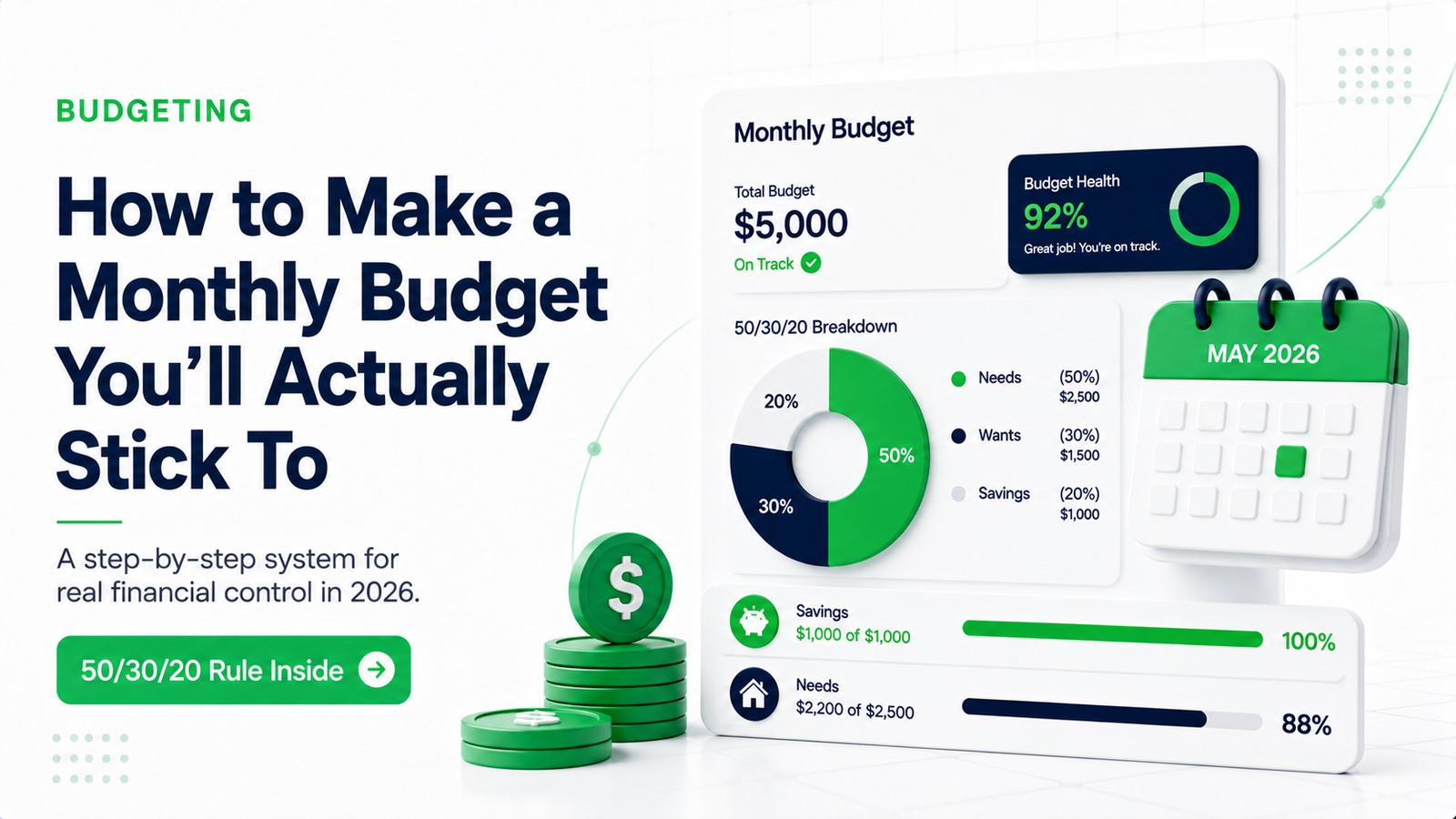
Most people have tried budgeting at least once — and most people have also quietly abandoned it within a few weeks. Not because they lack discipline, but because the budget they built didn’t match the life they were actually living. A monthly budget that works isn’t about restriction or willpower. It’s about designing a realistic, flexible system that keeps your money moving in the right direction — every single month. Whether you’re starting from zero or rebuilding after a financial setback, this guide will walk you through exactly how to create a monthly budget you’ll genuinely stick to.
Disclosure: This article contains affiliate links. We may earn a commission at no extra cost to you.
Key Takeaways
- The average American household spends $5,111 per month — knowing your baseline is the first step to budgeting effectively.
- The 50/30/20 rule is the most popular budgeting framework: 50% on needs, 30% on wants, and 20% on savings or ethical investments.
- People who write down their budget are 42% more likely to achieve their financial goals, according to a Dominican University study.
- Automating your savings and investments — even with as little as $5/week — dramatically increases long-term consistency.
- Revisiting your budget monthly takes as little as 15 minutes and is the single most important habit for financial success.
Why Most Budgets Fail (And How to Avoid It)
Let’s be honest: the traditional advice of “just spend less” has never helped anyone. Budgets fail for very specific, predictable reasons — and once you understand them, you can design your budget to sidestep every single one.
The three biggest reasons people abandon their budgets:
- They underestimate irregular expenses. Things like car repairs, annual subscriptions, birthday gifts, or back-to-school shopping aren’t monthly — but they happen every year. Forgetting to budget for them causes plans to collapse when they arrive.
- They set unrealistic targets. Cutting from $800/month in groceries to $300/month overnight is not sustainable. Small, gradual changes work; dramatic overnight restrictions don’t.
- They have no accountability system. A budget that lives only in your head has a zero percent success rate. Writing it down, using an app, or reviewing it with a partner makes a measurable difference.
The solution isn’t a stricter budget — it’s a smarter one. Let’s build it from the ground up.
Step 1 — Know Your Real Monthly Income
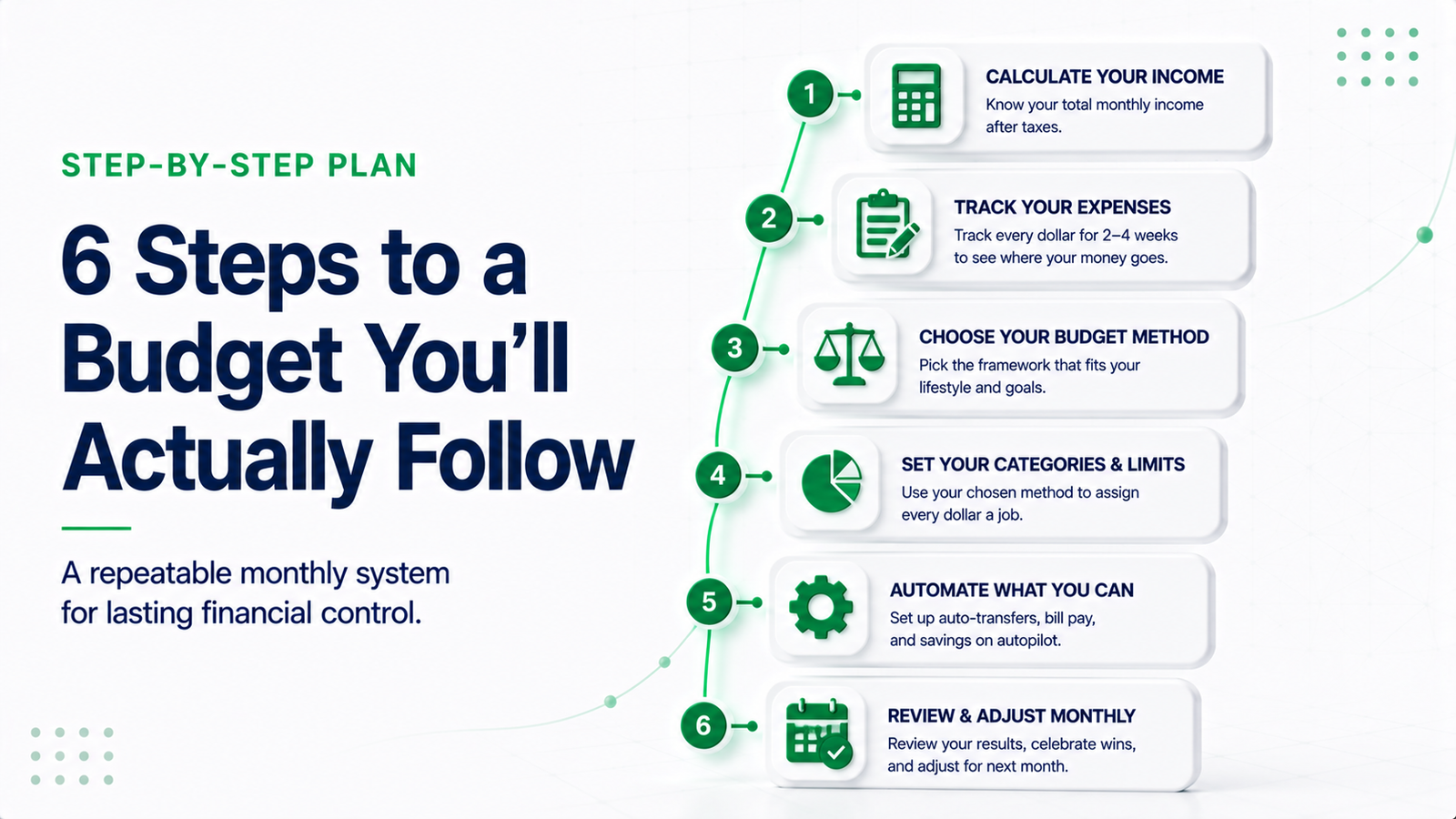
Before you allocate a single dollar, you need to know exactly how much money is coming in each month. This sounds obvious, but many people budget from their gross salary — the number before taxes — rather than their net take-home pay.
For example, if your annual salary is $60,000, your gross monthly income is $5,000. But after federal income tax, Social Security (6.2%), and Medicare (1.45%), your actual take-home pay might be closer to $3,800–$4,100/month depending on your state and deductions. That’s a difference of nearly $900 — a significant error if you’re building a budget around the wrong number.
What to include in your income calculation:
- Your primary job’s net take-home pay
- Freelance or self-employment income (use a conservative 3-month average)
- Rental income or dividends from halal investments
- Side hustle income (again, use a realistic average — not your best month)
If your income is variable, calculate your average monthly income over the last 6 months and use the lower end of that range for your budget baseline. This gives you a cushion. For more ideas on increasing that income number, check out our guide on passive income ideas that work with a full-time job.
Step 2 — Track Every Expense for 30 Days
Most people dramatically underestimate what they spend each month. A 2022 survey by Mint found that the average person underestimates their discretionary spending by 20–40%. That means if you think you’re spending $300 on food, the actual number is often $360–$420.
Before setting any budget limits, spend one full month tracking every single outgoing dollar. This isn’t punishment — it’s reconnaissance. You’re gathering data.
Categories to track:
- Housing (rent, utilities, home maintenance)
- Food (groceries + dining out — tracked separately)
- Transportation (fuel, public transit, parking, rideshare)
- Personal care and clothing
- Entertainment and subscriptions
- Medical and health
- Charitable giving (Zakat, Sadaqah)
- Savings and investments
- Miscellaneous (the category that always surprises people)
You can use a simple spreadsheet, a notes app, or a dedicated budgeting app. The tool matters less than the habit. After 30 days, you’ll have a clear, honest picture of where your money actually goes — and that’s where your real budget begins.
Step 3 — Choose the Right Budgeting Method
There’s no single budgeting method that works for everyone. Your income type, lifestyle, and financial goals all influence which system will feel natural. Here are the three most effective methods, along with who each one suits best:
The 50/30/20 Rule
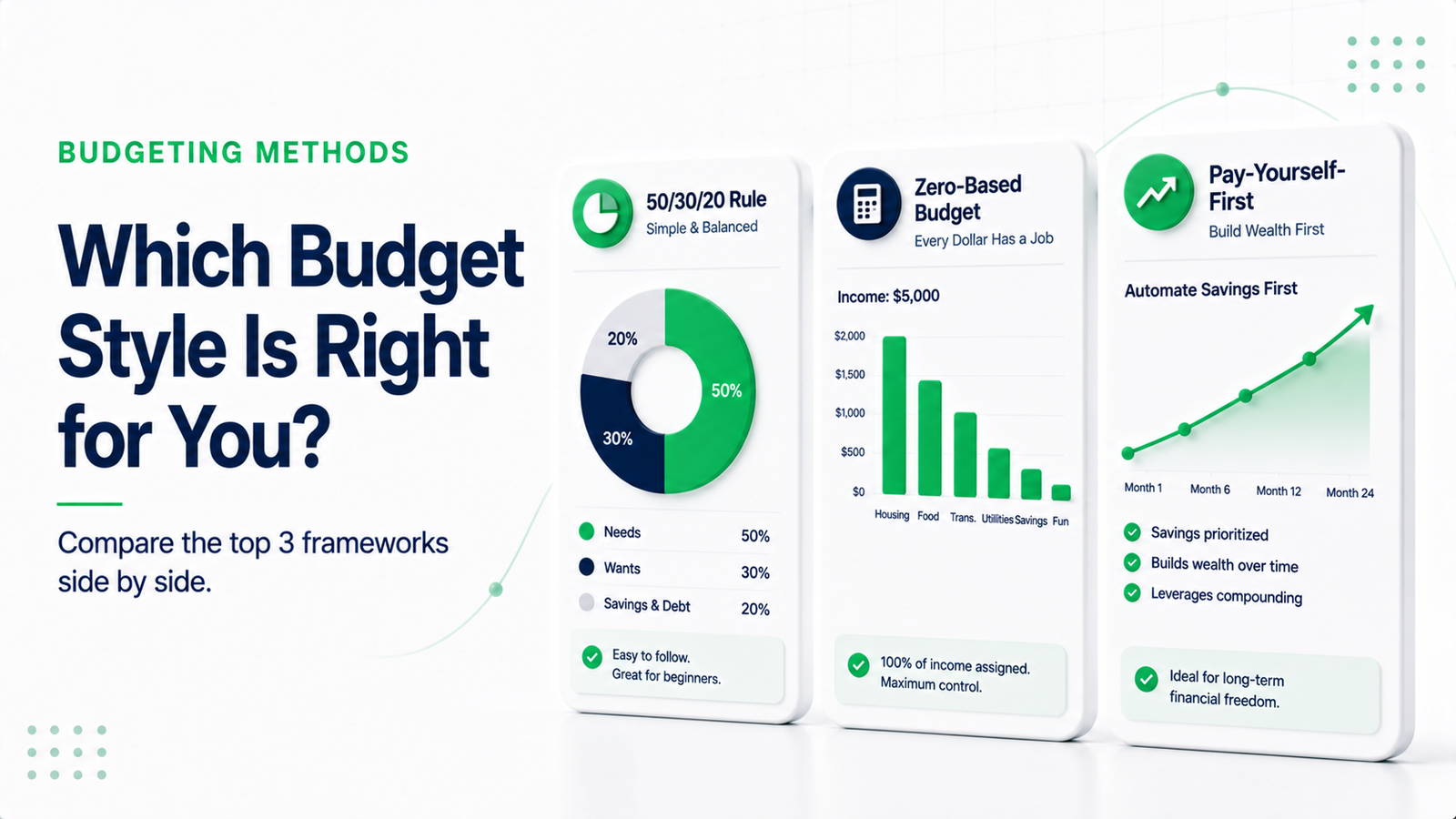
This is the most widely used framework for beginners. You divide your after-tax income into three buckets: 50% for needs (rent, groceries, utilities), 30% for wants (dining out, entertainment, hobbies), and 20% for savings and investments. On a $4,000/month take-home income, that’s $2,000 for needs, $1,200 for wants, and $800 toward your financial future.
Zero-Based Budgeting
Every dollar gets a job. You assign your entire income to specific categories until you reach zero — meaning income minus all allocations equals $0. This method gives you maximum control and works especially well for people who have paid off debt and want to build wealth aggressively. It requires more time upfront but delivers powerful results.
The Pay-Yourself-First Method
You decide on a savings/investment amount first — say, $500/month — and automate that transfer on payday. Then you live on whatever remains. This method is psychologically powerful because savings become non-negotiable rather than an afterthought.
Not sure which one fits your situation? We’ve done a deep comparison in our budgeting methods compared guide to help you decide.
| Method | Best For | Time Required | Flexibility | Savings Focus |
|---|---|---|---|---|
| 50/30/20 Rule | Beginners, busy professionals | Low (30 min/month) | High | Moderate (20%) |
| Zero-Based Budget | Debt payoff, detail-oriented people | High (2–3 hrs/month) | Low | High (customizable) |
| Pay-Yourself-First | Wealth builders, automators | Very Low (set once) | High | Very High |
| Envelope Method | Cash spenders, overspenders | Moderate | Low | Moderate |
Step 4 — Set Realistic Spending Categories
Now that you’ve chosen a method, it’s time to assign real dollar amounts to real spending categories. The key word here is realistic. Don’t budget $150/month for groceries if you’ve been spending $400. Instead, aim to reduce it to $350 over the next 60 days — a 12.5% reduction is sustainable; a 62% overnight cut is not.
Here’s an example monthly budget for someone earning $4,500/month take-home (using the 50/30/20 framework):
- Needs (50% = $2,250): Rent $1,200 | Utilities $120 | Groceries $350 | Transportation $300 | Phone $80 | Minimum charitable giving $200
- Wants (30% = $1,350): Dining out $200 | Entertainment/streaming $100 | Clothing $150 | Hobbies $200 | Personal care $100 | Travel savings $400 | Miscellaneous $200
- Savings & Investments (20% = $900): Emergency fund contribution $300 | Halal investment account $400 | Short-term savings goal $200
Notice how charitable giving (such as Zakat or Sadaqah) is built into the needs category. For many people, giving is not optional — it’s a financial and spiritual priority, and your budget should reflect that honestly.
Also notice the irregular expense strategy: build a small “miscellaneous” buffer every month. Even $100–$200 sitting in a separate account specifically for unexpected costs will prevent your entire budget from breaking down when life happens.
Step 5 — Automate Savings and Investments
The single most powerful thing you can do for your financial future is remove willpower from the equation entirely. When savings and investments happen automatically — the moment your paycheck lands — you never have to decide whether to save. It’s already done.
Set up automatic transfers on your payday to a dedicated savings account. Even starting with $50/week adds up to $2,600 by the end of the year. If you can manage $200/month, that’s $2,400 annually — not including any returns from investing it.
For those looking to grow their savings through ethical, Shariah-compliant investing, there are excellent platforms available. Wahed Invest and Amundi Islamic offer halal-screened portfolios that exclude companies involved in interest-based finance, alcohol, gambling, and weapons. If you’re comfortable with self-directed investing, platforms like Interactive Brokers and Trading 212 allow you to build your own halal-screened ETF portfolio with low fees and no minimum investment requirements.
For those who prefer a guided, automated approach, Betterment and Acorns offer automated investing features with low minimums — Acorns starts with as little as $5. While these platforms are not exclusively halal-screened, they can be used selectively with appropriate ETF choices. Always verify that any investment vehicle aligns with your ethical values before committing.
If you’re new to investing and want to understand where to put that 20%, our complete beginner guide to index fund investing is a great next step. You can also explore our list of the best investment apps for beginners starting with $100.
According to the Consumer Financial Protection Bureau (CFPB), automating savings is one of the top three most effective strategies for building long-term financial security — and the data backs this up consistently across income levels.
Step 6 — Review, Adjust, and Repeat Monthly
A budget is not a document you write once and file away. It’s a living system that needs a monthly check-in. Schedule 15–20 minutes at the end of each month — put it on your calendar like any other appointment — to review three things:
- Did your actual spending match your budget? Go category by category. Where did you overspend? Where did you underspend? No judgment — just data.
- Did anything change in your income or expenses? A raise, a new subscription, a one-off expense, or a seasonal bill all require adjustments to next month’s plan.
- Are you making progress toward your goals? Is your emergency fund growing? Are your investments on track? Are you moving toward your next milestone — whether that’s $1,000 saved, $10,000 invested, or a specific debt cleared?
This monthly ritual is what separates people who achieve financial goals from those who perpetually plan but never progress. The budget itself is just a framework — the review is where the real work happens.
Speaking of emergency funds: if you haven’t built one yet, that should be your first savings priority before anything else. Our guide on how to build an emergency fund fast covers exactly how to do it, even on a tight income.
Best Free and Paid Tools to Help You Budget
The right tool can make the difference between a budget you actually use and one that collects dust. Here are some of the best options across different preferences and budgets:
- YNAB (You Need A Budget) — $14.99/month or $99/year: The gold standard for zero-based budgeters. YNAB has helped users save an average of $600 in their first two months, according to the company’s own data. Offers a free 34-day trial.
- Mint (Free): Good for tracking and categorizing expenses automatically. Less structured for goal-setting but excellent for awareness.
- Google Sheets or Excel (Free): Fully customizable. Best for people who want complete control and don’t mind a little setup time.
- Monarch Money — $14.99/month: A premium alternative to Mint, with excellent household sharing features.
- Wise (Free account): If you earn or spend in multiple currencies, Wise offers multi-currency accounts with real exchange rates and no hidden fees — an excellent tool for internationally minded budgeters.
According to a study referenced by NerdWallet, people who use budgeting apps are 40% more likely to feel financially confident — and confidence is correlated strongly with consistent financial behavior.
For those sending money internationally or supporting family abroad, Wise is particularly worth including in your financial toolkit. It supports over 50 currencies and charges fees that are typically 4–8x lower than traditional bank wire transfers — making it easy to budget for international transfers without the surprise charges.
If you’re looking to grow your income so your budget has more breathing room, our roundup of best side hustles that actually pay in 2026 can help you add another income stream to your monthly budget picture.
Finally, remember this: the goal of a budget is not to deprive yourself. The goal is to make intentional choices about your money so that it serves your values, your family, and your future. Every dollar you consciously direct — whether toward your rent, your giving, or your investments — is a small act of financial self-determination. And over time, those small acts compound into something extraordinary.
For a detailed framework on reaching your first big savings milestone, our step-by-step plan for saving your first $10,000 pairs perfectly with the monthly budget system you’ve just built.
Frequently Asked Questions
What is the best monthly budgeting method for beginners?
The 50/30/20 rule is the most beginner-friendly monthly budget framework. It divides your after-tax income into three simple buckets: 50% for needs, 30% for wants, and 20% for savings and investments. On a $4,000/month take-home income, that means $2,000 for essentials, $1,200 for lifestyle spending, and $800 toward your financial future. It’s flexible enough to adjust over time and doesn’t require tracking every single transaction in granular detail.
How much of my monthly budget should go toward savings?
Financial experts generally recommend saving at least 20% of your net income each month — a guideline endorsed by institutions like the CFPB. However, if you’re starting from zero, even 5–10% is a meaningful beginning. The key is consistency over amount. Saving $200/month every month for 12 months builds a $2,400 emergency fund — enough to cover most minor financial emergencies without going into debt.
What should I do if my expenses exceed my income every month?
This is more common than most people admit, and it’s solvable. First, identify which specific categories are over budget — usually dining out, subscriptions, or transport. Reduce one category at a time by 10–15% rather than slashing everything at once. Second, look at ways to increase income, even temporarily. A side hustle generating an extra $300–$500/month can bridge the gap while you adjust your spending habits. Our guides on side hustles and passive income ideas can help with both angles.
Are there halal-compliant ways to invest the savings portion of my budget?
Absolutely. There are a growing number of halal-screened investment platforms and products available. Wahed Invest offers fully Shariah-compliant portfolios with no minimum investment. Platforms like Interactive Brokers and Trading 212 allow you to invest in halal-screened ETFs — such as the SP Funds S&P 500 Sharia ETF (SPUS) — that exclude companies involved in interest-based finance, alcohol, pork, gambling, and weapons manufacturing. Always verify the screening methodology of any fund before investing to ensure it aligns with your values and standards.
How often should I update my monthly budget?
At a minimum, review and update your budget at the end of every month — a process that takes 15–20 minutes once you have a system in place. Additionally, do a larger overhaul any time your financial situation changes significantly: a new job, a rent increase, a new family member, or a major financial goal achieved. Your budget is a living document, not a one-time exercise. The more regularly you review it, the more accurate and useful it becomes.
Ready to Take Control of Your Finances?
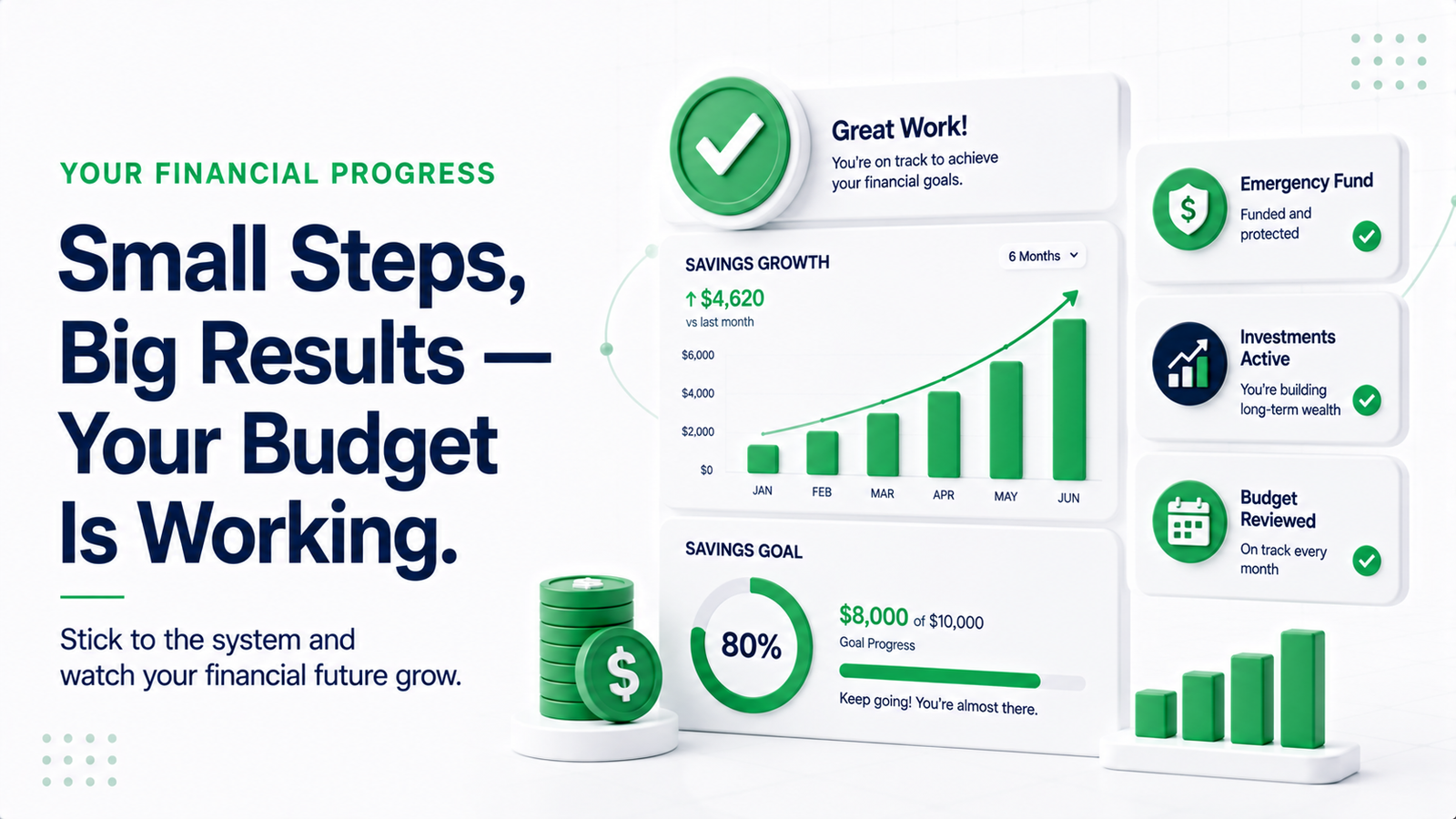
Start today with one concrete action: open a spreadsheet or download a free budgeting app, and write down your take-home income for this month alongside your three biggest spending categories. That’s it — just three categories. From there, you can build your full monthly budget step by step using the framework in this guide. Small steps, taken consistently, are what separate people who stress about money from those who feel genuinely in control of it. Your financial future starts with this month’s budget.