
Key Takeaways
- A recession is a normal part of the economic cycle — every recession in history has eventually ended in recovery
- The people who survive recessions best are those who prepared before it hit — not during
- A 3 to 6 month emergency fund is your single most powerful recession protection tool
- Staying invested during a downturn is almost always smarter than panic-selling
- Diversifying your income before a recession gives you options that most people do not have during one
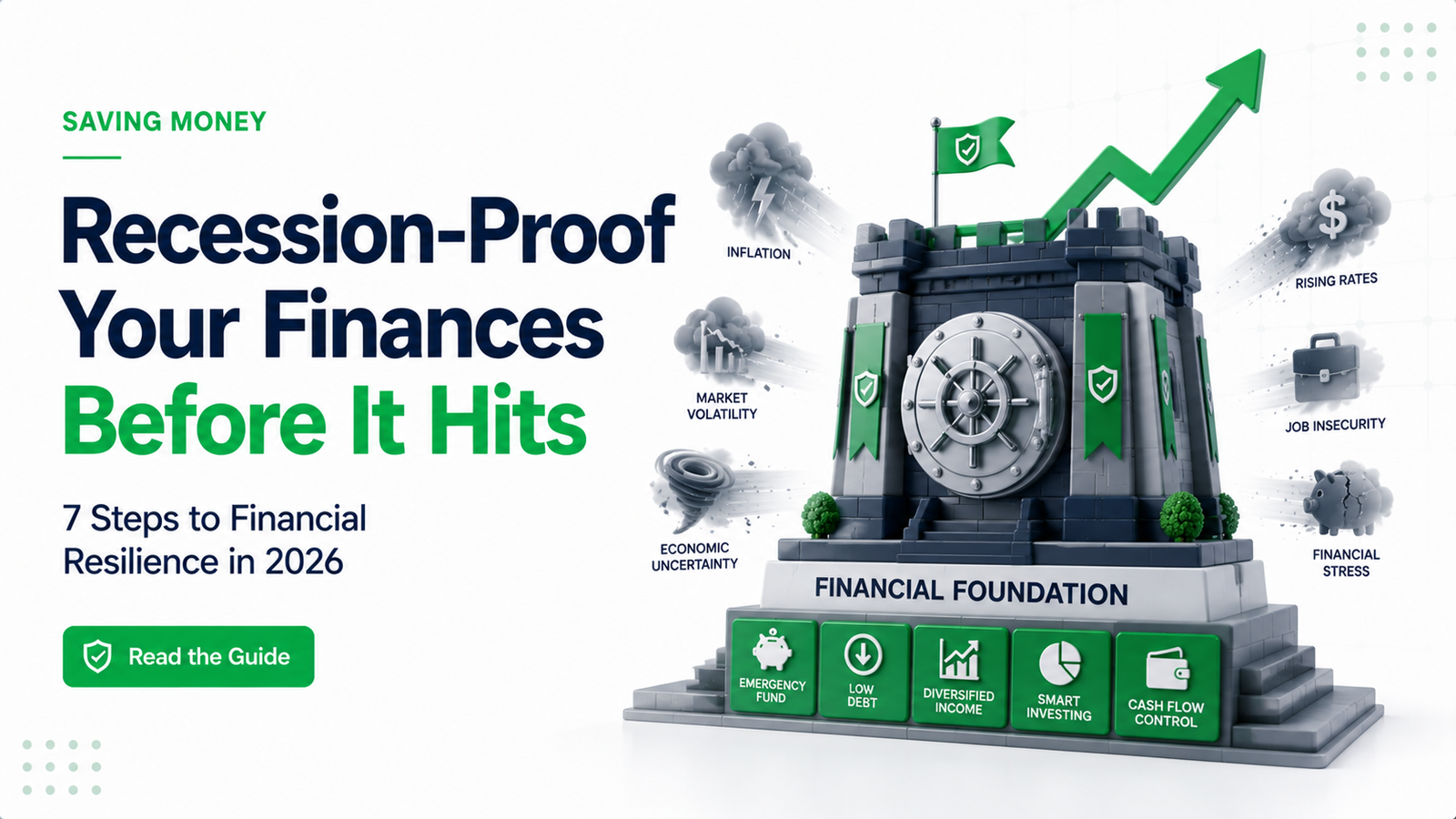
Recession fears are rising in 2026. Inflation is still elevated, job markets are shifting, and economic uncertainty is making headlines every week. Whether a full recession hits or not, one thing is certain — the people who prepare in advance will be in a far stronger position than those who wait and react.
A recession does not have to be a financial disaster. For those with the right systems in place, it can actually be a time of opportunity — buying investments at lower prices, negotiating better deals, and building habits that create long-term resilience.
This guide gives you a practical, step-by-step plan to survive — and even thrive — during a recession in 2026, no matter where you live or what you earn.
Table of Contents
- What is a recession and how does it affect you
- Step 1 — Build your emergency fund now
- Step 2 — Cut expenses before you are forced to
- Step 3 — Pay down and avoid new debt
- Step 4 — Protect and diversify your income
- Step 5 — Stay invested and do not panic-sell
- Step 6 — Invest in your skills and employability
- Step 7 — Look for recession opportunities
- Frequently Asked Questions
What Is a Recession and How Does It Affect You?
A recession is a significant decline in economic activity that lasts for more than a few months. It typically shows up as rising unemployment, reduced business production, falling consumer spending, and declining stock markets.
On a personal level, a recession can mean:
- Greater risk of job loss or reduced working hours
- Higher cost of living as businesses pass on their own rising costs
- Falling investment portfolio values in the short term
- Tighter lending standards — it becomes harder to access credit
- Slower salary growth or salary freezes
The good news: recessions are a normal part of the economic cycle, and the stock market has recovered from every single one throughout history. The key is to position yourself so that a downturn does not force you into damaging financial decisions.
External resource: What is a recession — Investopedia
Step 1 — Build Your Emergency Fund Now
Your emergency fund is your recession armour. Liquidity is king during a downturn — cash reserves prevent you from being forced to sell investments or take on debt during a market dip.
Aim for 3 to 6 months of essential living expenses in a separate, dedicated savings account. If you work in a volatile industry, are self-employed, or have dependants, aim for 6 to 12 months.
How to build it fast:
- Automate a fixed transfer to your savings account on payday
- Cut one major spending category temporarily and redirect it to savings
- Sell items you no longer use and put 100% into the fund
- Direct any windfall income — bonuses, tax refunds, gifts — straight to the fund
Do not invest your emergency fund. It needs to be safe, stable, and accessible within 24 to 48 hours. Keep it in a dedicated savings account completely separate from your spending money.
Also read: How to Build an Emergency Fund Fast
Step 2 — Cut Expenses Before You Are Forced To
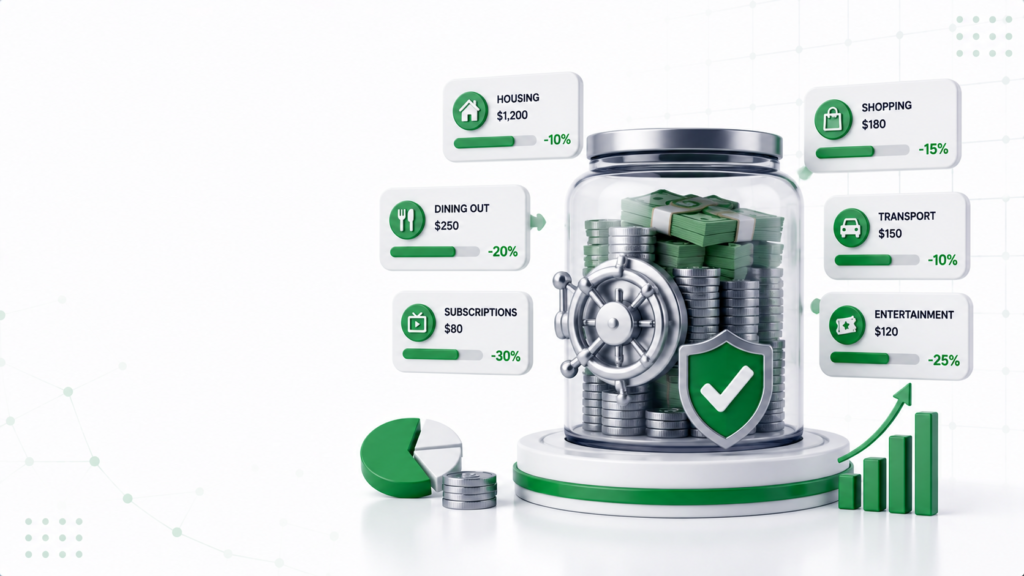
Cutting expenses during a recession is reactive. Cutting them before is strategic. Audit your “burn rate” — distinguish between survival expenses and discretionary lifestyle costs.
Start with a recession budget — a leaner version of your current budget that covers only essentials:
| Category | Keep | Cut or Reduce |
|---|---|---|
| Housing | Rent / mortgage | Unnecessary upgrades, excess space |
| Food | Groceries, home cooking | Dining out, delivery apps, meal kits |
| Transport | Essential commuting | Rideshares, car upgrades, excess trips |
| Entertainment | One streaming service | All other subscriptions, gym, events |
| Shopping | Essential clothing, household | Impulse buys, fashion, non-essentials |
Knowing your minimum monthly survival number gives you clarity. If your income drops, you know exactly what you need to cover and what you can cut immediately without panic.
Also read: Budgeting Methods Compared — 50/30/20 vs Zero-Based
Step 3 — Pay Down and Avoid New Debt
Debt is dangerous in a recession. Monthly obligations stay fixed even when your income drops. The lower your debt burden going into a downturn, the more resilient your finances become.
Priority actions:
- Pay off high-interest consumer debt first — credit card balances and personal loans become a serious burden if income drops. Use the debt avalanche or snowball method to eliminate them as fast as possible.
- Avoid taking on new debt — a recession is not the time for large purchases on credit. Preserving cash flow flexibility is critical when uncertainty looms.
- Contact creditors early if you are struggling — most creditors have hardship programs. Reaching out before you miss a payment gives you far more options than waiting until you default.
External resource: How to get out of debt — NerdWallet
Also read: How to Get Out of Debt in 12 Months
Step 4 — Protect and Diversify Your Income
A single income source during a recession is a single point of failure. One of the smartest ways to survive a recession financially is to create multiple income streams — freelancing, remote work, or turning a skill into a side business.
Ways to diversify your income before a recession hits:
- Start a side hustle now — freelance writing, design, tutoring, virtual assistance, delivery. Build the income stream while your main job is stable.
- Build digital income assets — a blog, a YouTube channel, digital products, or affiliate marketing that generates income passively over time.
- Strengthen your position at work — make yourself indispensable. Take on high-visibility projects, document your impact, and build relationships across your organisation. The hardest workers to let go are the most valuable ones.
- Ask for a raise now — salary freezes are common during recessions. Negotiate your raise before the downturn hits, not after.
- Keep your skills current — in every recession, the most skilled and adaptable workers fare best.
Also read: Best Side Hustles That Actually Pay in 2026

Step 5 — Stay Invested and Do Not Panic-Sell
One of the most damaging things investors do during a recession is panic-sell their portfolio when markets fall. This locks in losses permanently and means missing the recovery that always follows.
Stay invested and do not try to time the market — recoveries often follow sharp declines, and those who remain invested are best positioned to benefit.
What to do with your investments during a recession:
- Keep your automatic contributions running. Investing the same amount each month during a downturn means you buy more shares at lower prices — this is called dollar-cost averaging and it works powerfully over time.
- Do not check your portfolio daily. Watching the numbers fall triggers emotional decisions. Check quarterly and stay focused on the long term.
- Consider your portfolio balance. If you are heavily weighted in one sector, a recession may be a prompt to diversify across different industries and geographies.
- If you have extra cash, consider investing more. Market downturns are sales on stocks. Long-term investors who buy during recessions often see the strongest returns in the years that follow.
External resource: How to recession-proof your portfolio — Investopedia
Step 6 — Invest in Your Skills and Employability
Your income-earning ability is your most valuable financial asset — and it is recession-proof if you maintain it. Evidence shows that more educated and skilled workers fare significantly better during recessions — unemployment among higher-skilled workers is consistently lower during economic downturns.
High-value skills to develop in 2026:
- Digital marketing and content creation
- Data analysis and basic coding
- Project management and leadership
- Sales and client relationship skills
- AI tools and automation proficiency
Free and low-cost ways to upskill: Coursera, LinkedIn Learning, YouTube tutorials, and industry-specific certifications. Many employers value demonstrated skills and projects over formal qualifications alone.
Step 7 — Look for Recession Opportunities
While most people see only risk in a recession, those who are financially prepared see opportunities that are simply not available in a booming economy.
- Stock market discounts. A recession brings lower stock prices across the board. For long-term investors with cash available, this is one of the best buying opportunities that exists. The investors who built the most wealth did so by buying during downturns.
- Property and asset prices fall. Real estate and other assets often become more affordable during recessions, creating opportunities for those with saved capital and patience.
- Less competition for jobs and clients. Many people stop applying for jobs, pitching clients, or starting businesses during a recession. The ones who keep going often find less competition and more open doors than they expected.
- Stronger negotiating position. Rents, service contracts, and supplier prices are often more negotiable during a downturn. Use that leverage.
Also read: Passive Income Ideas That Work with a Full-Time Job
Frequently Asked Questions
How long do recessions typically last?
Historically, recessions have lasted anywhere from 2 months to around 18 months, with an average duration of approximately 10 to 11 months. Some are short and sharp, others are longer and slower. The important thing to understand is that every recession in recorded economic history has eventually ended in recovery — the question is whether your finances are positioned to survive the downturn and benefit from what follows.
Should I stop investing during a recession?
Generally, no. Stopping your investments during a market downturn means missing the recovery, which is often one of the strongest periods of market growth. If you have a long-term investment horizon of five years or more, continuing to invest consistently through a recession — even in smaller amounts — is almost always the smarter approach. The only exception is if you need the money within the next one to two years, in which case it should not be in the stock market at all.
What should I do if I lose my job during a recession?
First, activate your emergency fund — this is exactly what it is for. Then immediately reduce your spending to your bare minimum survival budget. File for any government unemployment support you are entitled to without delay. Begin applying for new positions immediately — the job market during a recession is competitive, so volume and speed matter. Meanwhile, explore any freelance or side income you can generate while searching. Recessions do not last forever, and having a plan removes much of the panic from the situation.
Final Thoughts
A recession is not a financial death sentence — it is a test of preparation. The people who survive and thrive during economic downturns are not the ones with the highest salaries. They are the ones who built emergency funds, reduced debt, diversified their income, and stayed calm when others panicked.
Start preparing now. The best time to recession-proof your finances is before the recession arrives — not after. Build your buffer, cut the fat, protect your income, and keep investing. When the recovery comes — and it always does — you will be positioned to benefit from it.
Keep Reading
Strengthen your financial foundation
Coming next: The Power of Compound Growth